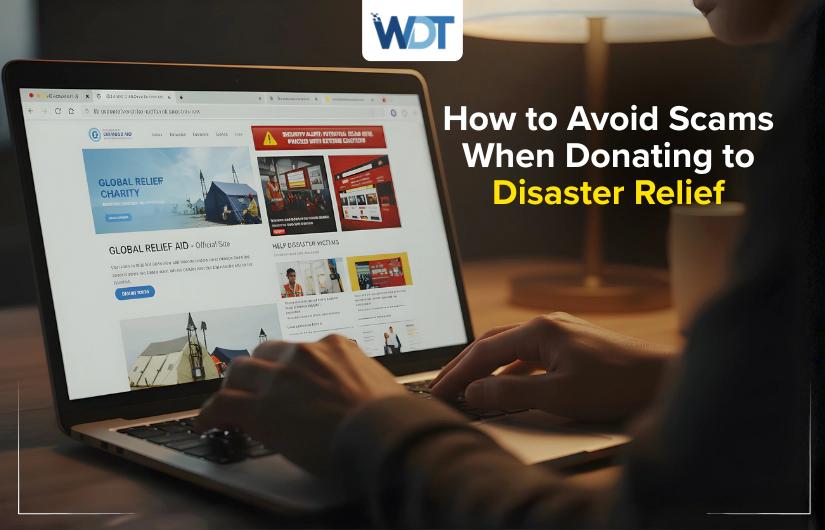
When a disaster strikes, like a flood, earthquake, cyclone, or wildfire, people around the world want to help. Many donate money, clothes, or food to support those who are suffering. Unfortunately, scammers take advantage of these emotional moments. They create fake donation websites, fake charities, and fake social media pages to steal money from kind-hearted people.
The good news is that avoiding these scams is easy if you know what to look for. You do not need advanced knowledge or technical skills. Simple checks and careful thinking can protect you and ensure your donation truly reaches people in need. This blog explains everything in very simple language so anyone can follow it.
1. Do Not Donate Through Random Links
After a disaster, you may see many messages on social media, WhatsApp, or email asking you to donate immediately. These messages often contain links to unknown websites. Scammers create these links to look urgent and emotional.
If someone sends you:
- A donation link from an unknown number
- A random fundraising page
- A message asking for money directly
- A story that sounds dramatic but has no details
Do not click or donate.
Always check the source. Real charities do not send random messages to everyone.
2. Donate Only to Trusted and Well-Known Charities
The safest way to donate is through organizations that are known, verified, and recognized worldwide or nationally. Large, established charities have strong security systems, official websites, and clear donation processes.
Examples of reliable types of organizations include:
- Red Cross or Red Crescent
- Government-approved relief funds
- Official NGOs with long service history
- International humanitarian groups
- Registered local charities with proper records
If you choose a smaller charity, make sure it is genuine by checking reviews, registration numbers, and official reports.
3. Check the Website Carefully Before Donating
Fake donation sites look real, but small details can reveal the truth. Before you enter your card or bank details, look for:
✔ HTTPS
The website should start with https:// and show a small padlock icon.
✔ Correct spelling of the charity name
Scammers often change one or two letters to trick people.
✔ Clear contact information
A real charity will have a phone number, email, and office address.
✔ No spelling or grammar mistakes
Fake sites often have poor English and copied content.
✔ No pressure messages
Phrases like “Donate NOW, or people will die!” are emotional traps.
If something feels strange, leave the website immediately.
4. Beware of Fake Social Media Pages
Scammers often create social media accounts that look like official charity pages. They copy the logo, name, and photos from the real organization. They then post urgent calls for donations.
Always check:
- Account verification badge (blue tick)
- Number of followers
- History of posts
- Official website links
- Comments from real people
If the account was created recently or has very few posts, it is likely fake.
5. Never Donate in Cash to Unknown Collectors
Sometimes people come door-to-door asking for donations in the name of disaster relief. They may carry:
- Fake ID cards
- Fake receipts
- Fake donation boxes
Unless the collector is from a trusted organization you personally know, do not donate cash. Cash has no record and cannot be traced. It is safer to donate online through official channels.
6. Be Careful with Fundraisers Started by Individuals
Many people on platforms like Instagram, Facebook, and fundraising websites create personal donation requests. Some of them are genuine, but many are fake.
To stay safe, check:
- Who started the fundraiser
- If they have posted real proof
- Whether they share updates
- Photos or videos from the disaster area
- If their identity can be verified
If there is no transparency, avoid donating.
7. Do Not Share Your Personal Details Unnecessarily
A real charity will never ask for:
- Your ATM PIN
- Your passwords
- Your OTP
- Full card information on chat or call
- Banking login details
If someone asks for these details, it is a scam.
Even when donating online, share only the necessary information through secure payment gateways.
8. Watch Out for Emotional Manipulation
Scammers know people become emotional during disasters. They use photos of injured people, crying children, or damaged houses to manipulate donors. Many of these images are stolen from the internet.
Emotional fundraising messages often include:
- “Please help us immediately… my family is dying!”
- “We only need 10 more donors to save this child!”
- “God will bless you if you donate now!”
Real charities share detailed updates, not emotional pressure.
9. Verify Through Official Government Sources
During large disasters, governments release official lists of verified charities and relief funds. Always check:
- Government websites
- News reports
- Verified NGO lists
- Official social media accounts
If the charity is approved or mentioned by government authorities, it is generally safe.
10. Check Whether the Charity Is Registered
Every genuine charity must be officially registered. Before donating, search online for:
- Charity registration number
- NGO directory listing
- Tax exemption certificate
- Annual reports
- Donation receipts
If there is no record of the charity anywhere, it is a warning sign.
11. Read Reviews and Complaints
You can search the charity name followed by:
- “scam”
- “reviews”
- “complaints”
- “fraud”
If many people have reported problems like money not reaching victims or no updates after donation, stay away.
12. Trust Your Instincts
If something does not feel right, don’t donate. Scammers try to create urgency so people don’t think too much. Take your time. Real charities appreciate thoughtful giving.
Final Thoughts
Donating to disaster relief is a beautiful act of kindness. Your support can save lives, provide food, give shelter, and help families rebuild. But scammers try to misuse your generosity for their own profit.
By following simple steps, like checking the website, verifying the organization, avoiding random links, and donating only through trusted sources, you can protect your money and make sure your help reaches real people in need.
Stay alert, stay informed, and continue supporting those who need it most, safely.